
Hello to my lovely readers and Welcome to my blog post! Before I get straight to the main content of this blog post, let me share with you my tragic story.
I had a couple of assignments from the Cultural Heritage in Tourism course, which I could choose between doing video recordings or crafting blog posts. I was thinking of staying out of my comfort zone by doing the videos just like the travel bloggers do on social media platforms. So, the day before the shooting I did the route survey for planning my trip and script for my videos, and I thought it’s going to be so much fun I was about to have.
But in reality, my dream didn’t come true on the -13 degrees Celsius day. My nose was running, so I kept sniffing during the taking. The weather made my voice turn bad and sound so desperate in those videos. Then, I ended up writing the blog posts instead because it may be more convincing to my readers to follow this walk.
Okay! – now let’s get back to my business here, the ‘Pori of Pipes’. – It is one of the walking routes to learn about the cultural heritage of Pori through its historic industrial stories and significant built cultural environment. There actually are many thematic cultural routes for you to learn about the historical stories of Pori (visit here https://storymaps.arcgis.com for other choices!).
For myself, I chose the ‘Pori of Pipes’ route because I enjoy the vibe around the Kokemäenjoki River and the surrounding architectures very much. So, I want to learn a bit more about it. If you want to learn about Pori too but still have no idea where to start, just walk with me through the ‘Pori of Pipes’ right now.
Check-in #1: the Rosenlew Museum
The Museum was completed in 1866, and this building was first used as a grain warehouse. In the history, the Rosenlew company was one of Finland’s biggest industrial companies. They produced everything from steam engines and machines to frying pans and yeast.
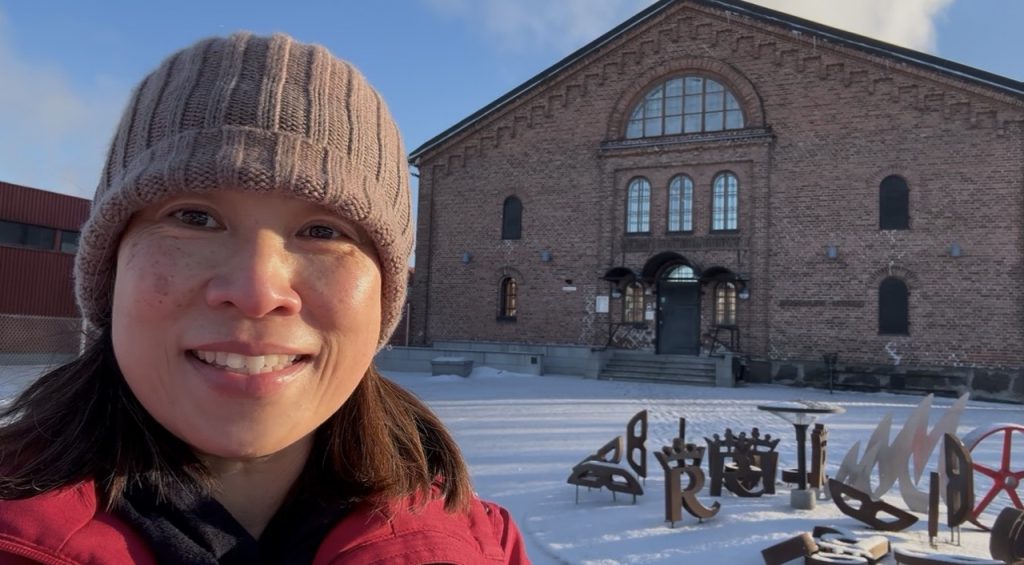
For the museum, I didn’t get a chance to check out inside the museum because it was closed. So, I plan to visit the museum again soon because I want to learn more about the Rosenlew Company and how the industry shaped everyday life in Pori for over 100 years
For your information, the Rosenlew Museum is open from Tuesday to Sunday (11 a.m. – 5 p.m.) and closed on Monday. Students are free of charge for the entrance fees.
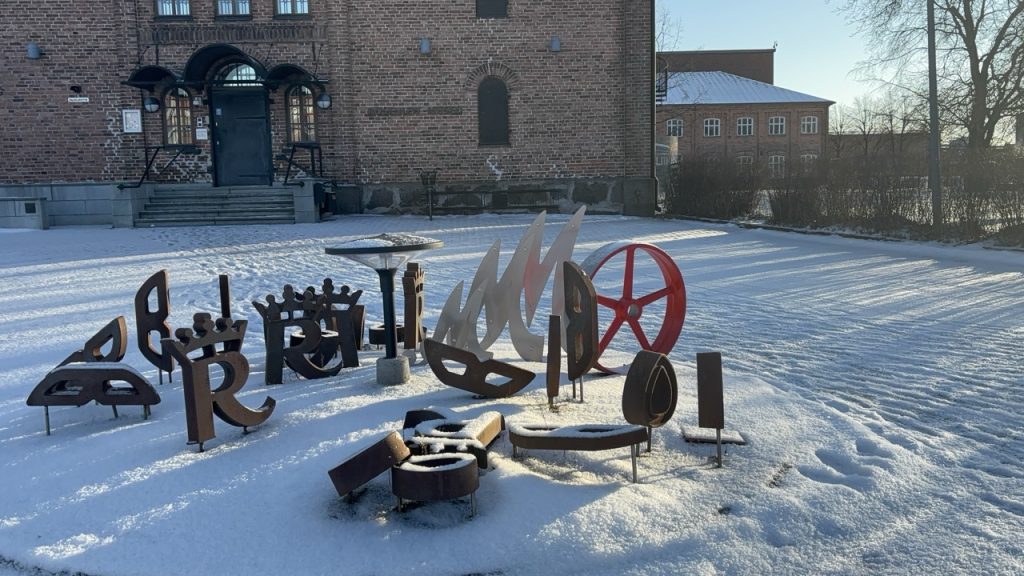
Also, the museum is next to the Aittaluoto industrial area, which is the 2nd check-in of this walk.
Check-in #2: Aittaluoto Industrial Area
Most of this area used to be agricultural land and workers’ homes. It later became industrial area in 1872 when a steam sawmill was built here. And because of the growth of the industries, those homes were finally replaced by the large factories.
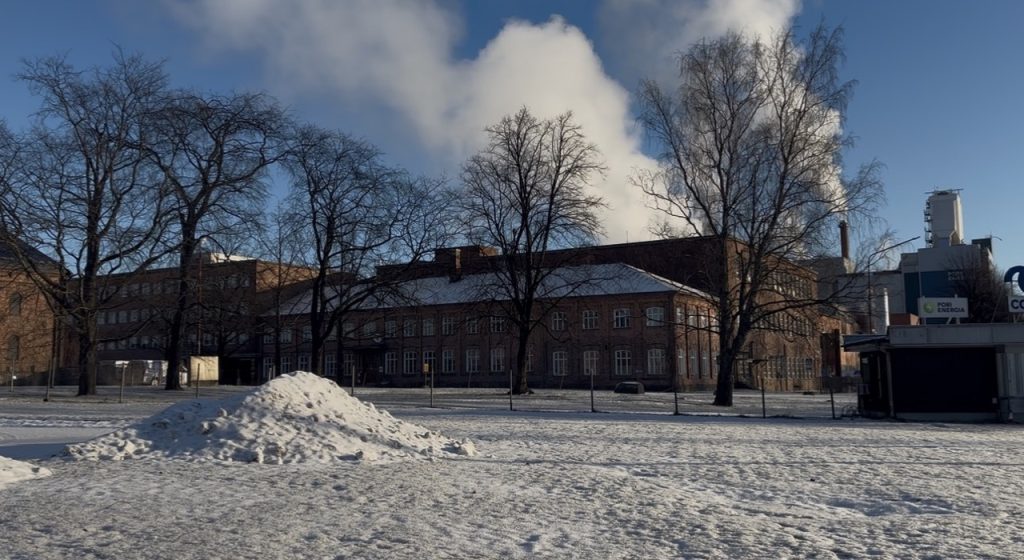
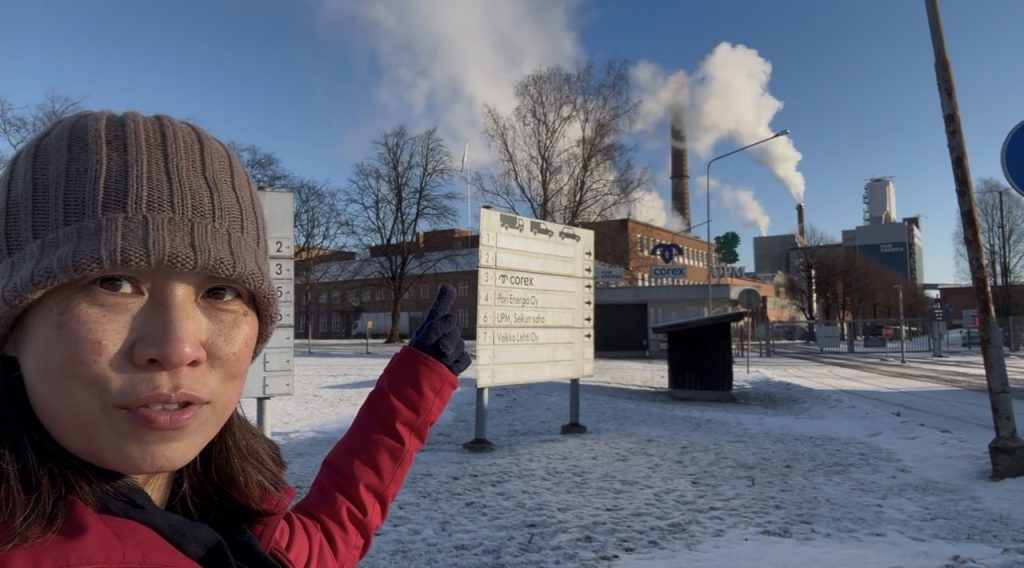
Industry still continues here even today with sawmills, power plants, and factories. That’s why, I could see many big trailer trucks coming in and out on the day I visited.
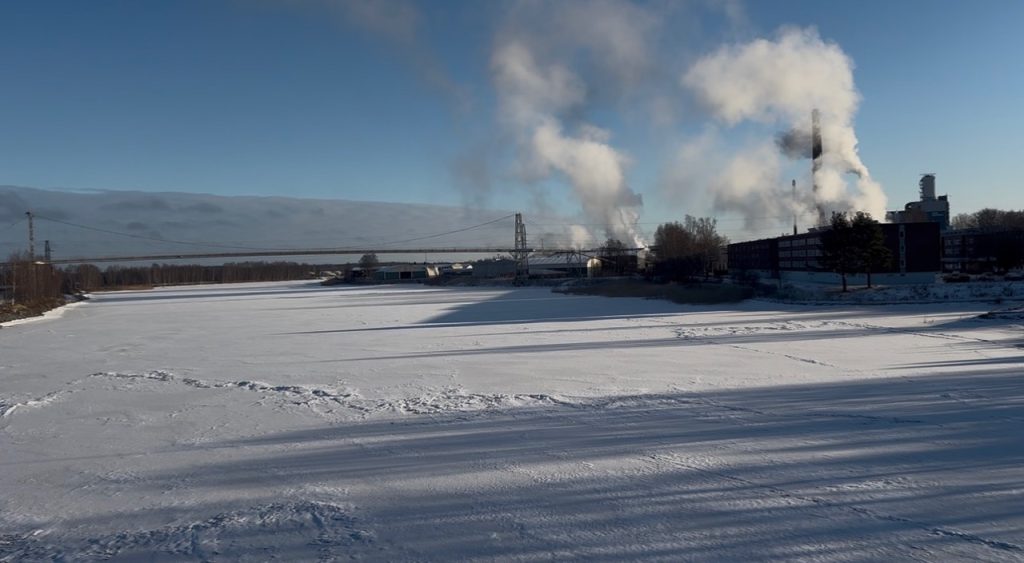
From here, I walked across the Linnansilta Bridge, where I could see the frozen Kokemäenjoki River in winter and the wide-angle view of the Konepaja Area, the next check-in spot. It was very beautiful to me!
Check-in #3: Konepaja Area
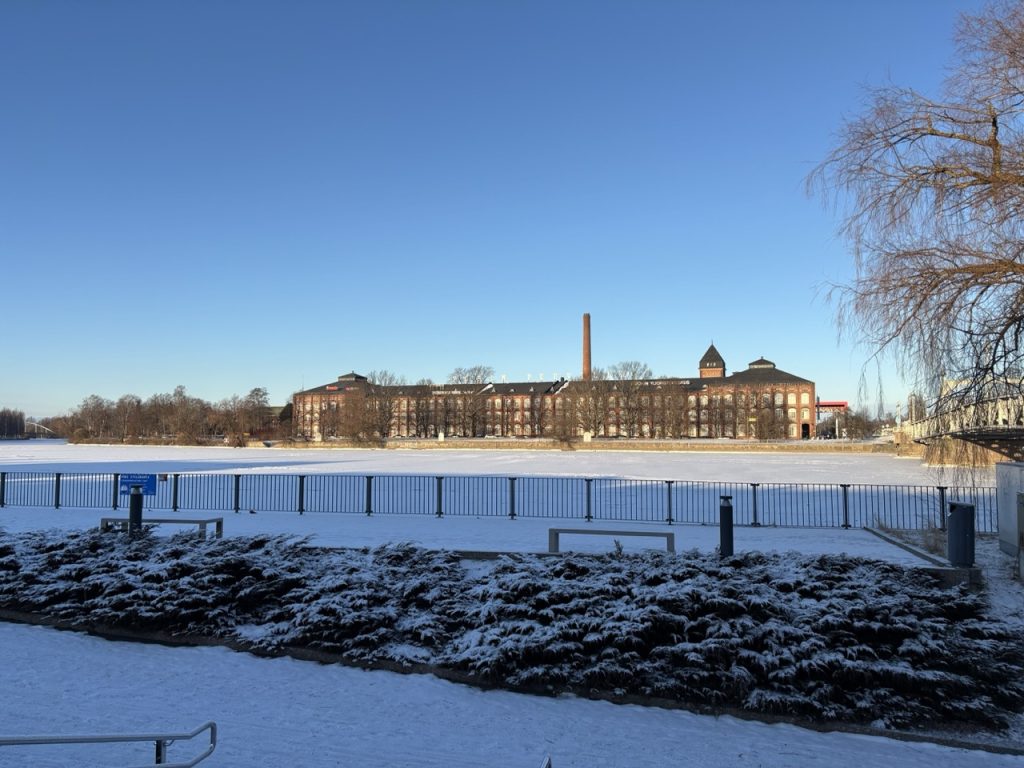
This area is the Konepaja or the machine workshop area. It was founded in 1858 and was one of Pori’s first major factories.
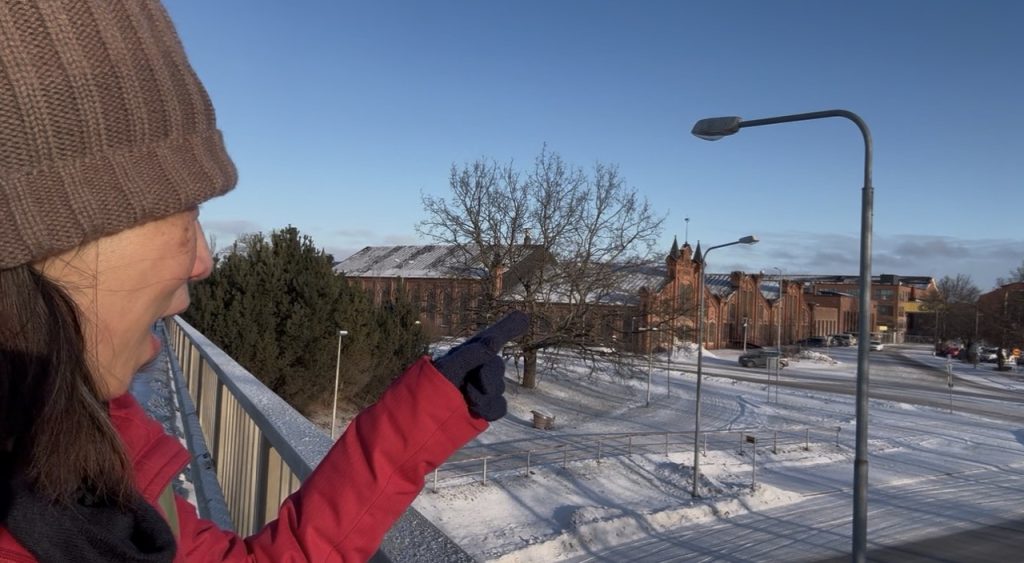
In the past, there were many things built here like machines, ships, engines, and farming equipment. Some industries still operate here today. It’s too bad that I didn’t get a chance to spend much time here as the weather was getting too cold for me. So, I decided to walk to Puuvilla for having lunch at my favourite restaurant over there.
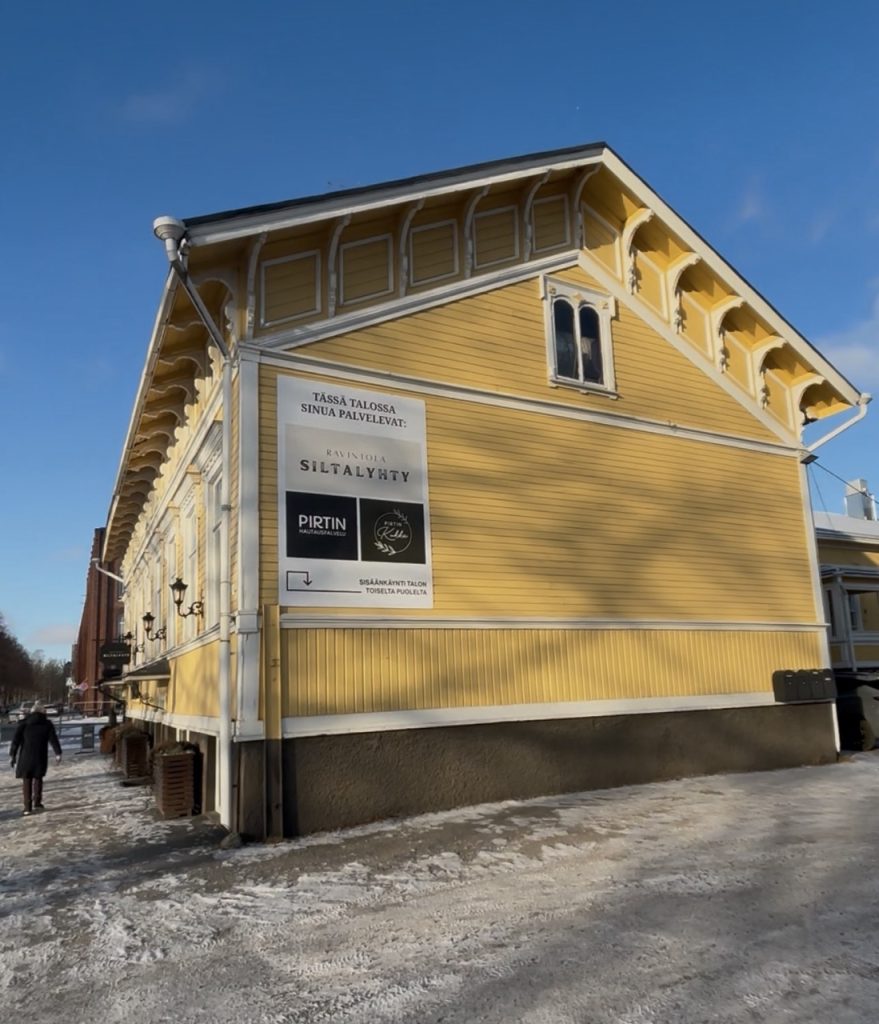
Check-in #4: Cotton Factory, Puuvilla Area
This huge cotton factory was built between 1899 and 1900 by a group of businessmen from Pori (Gustaf Efraim Ramberg, Bruno and F. A. Jusélius, Erik Mellin and John Bohm and A. Ahlström and W. Rosenlew & Co.).
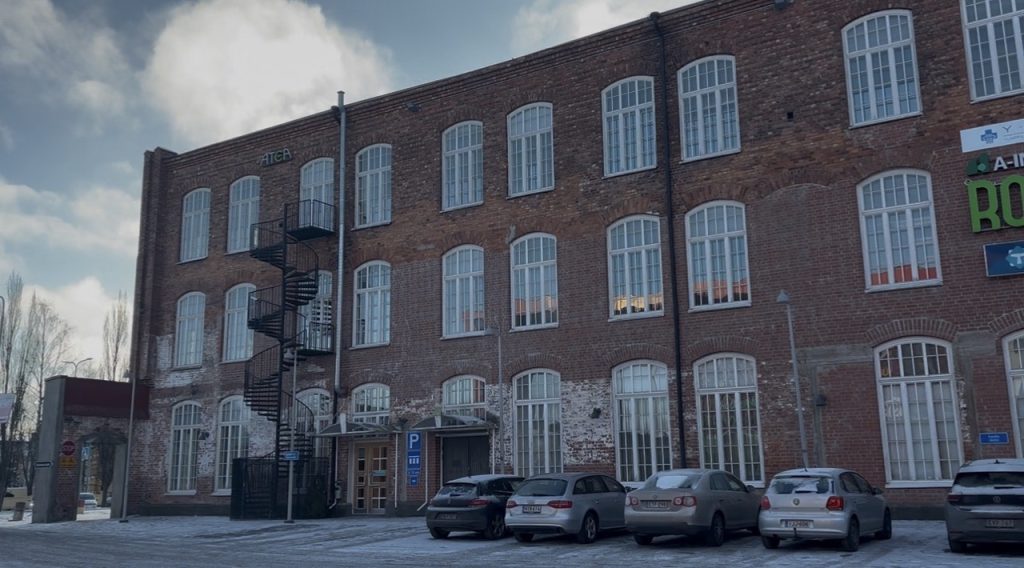
At that time, the textile industry was ranked as one of the city’s largest employers. It provided jobs for over 2,000 locals in the 1930’s because Pori’s cotton products were exported around the world.
Sadly, a major fire in 1981 damaged the factory and caused production finally ended. Today, this beautiful brick buildings have new life as Puuvilla shopping center, offices, culture spaces, and a university campus.
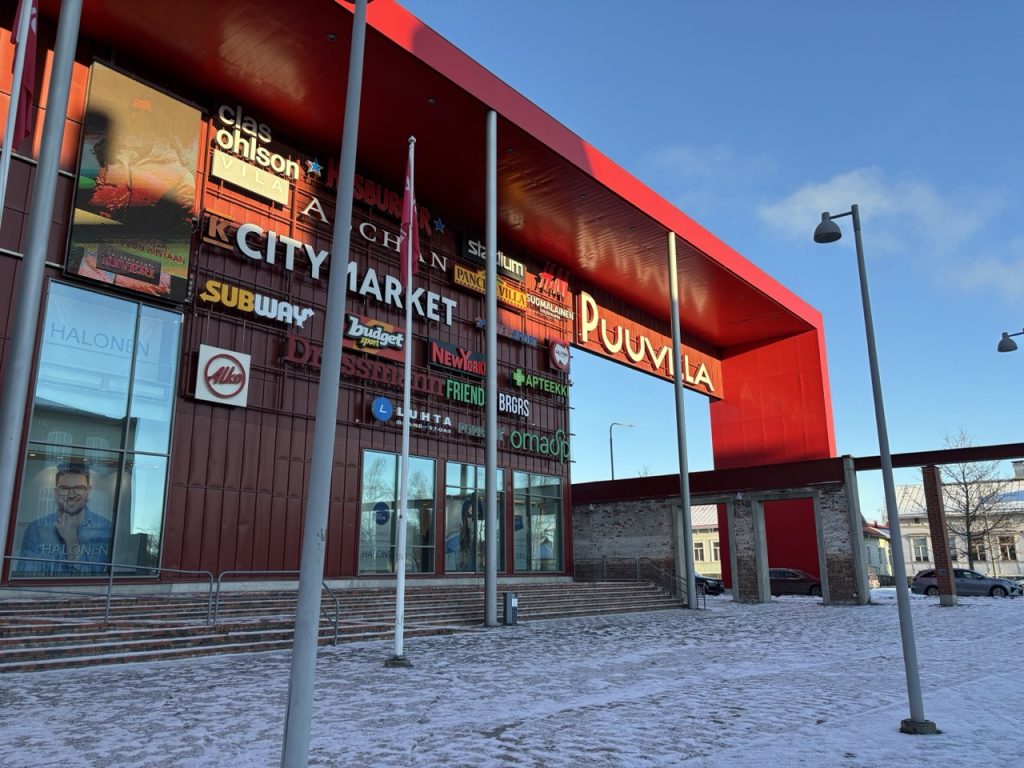
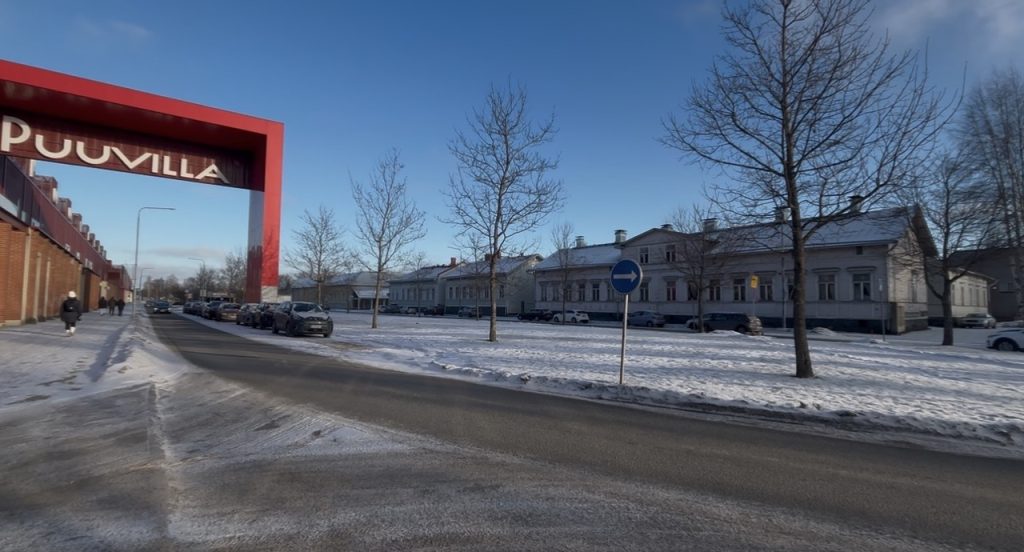
I like spending time here and enjoy walking around wooden houses nearby Puuvilla. It gives me quite a different feeling, in a good way, than in the city center with modern residential buildings around.
Check-in #5: Riverside
During those industrial times, the Kokemäenjoki River played a crucial role to the people, the city, and the international trades as it carried everything like wood, machines, and other finished products. So, I think I could imagine how this riverside would be as the busiest place in Pori city. It was where ships, trains, and people all met here! – Goods were loaded, markets for fish shopping were held, and cafés served travelers. Also, boats carried people across the river for leisure.
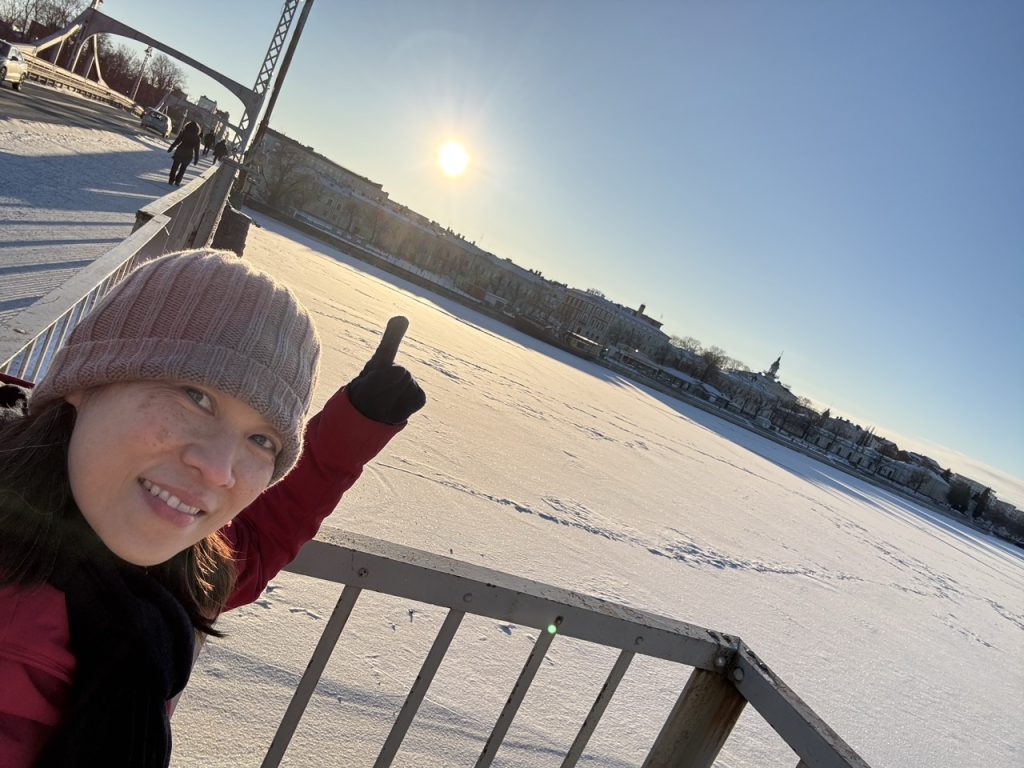
After the last fire in 1852, only stone buildings were required between Valtakatu and the riverbank area. The expansion of transformation from a wooden town to a stone city began in the 1950s and 1960s. That’s why this area looks more solid and grand, especially when you see it from the Porinsilta Bridge.
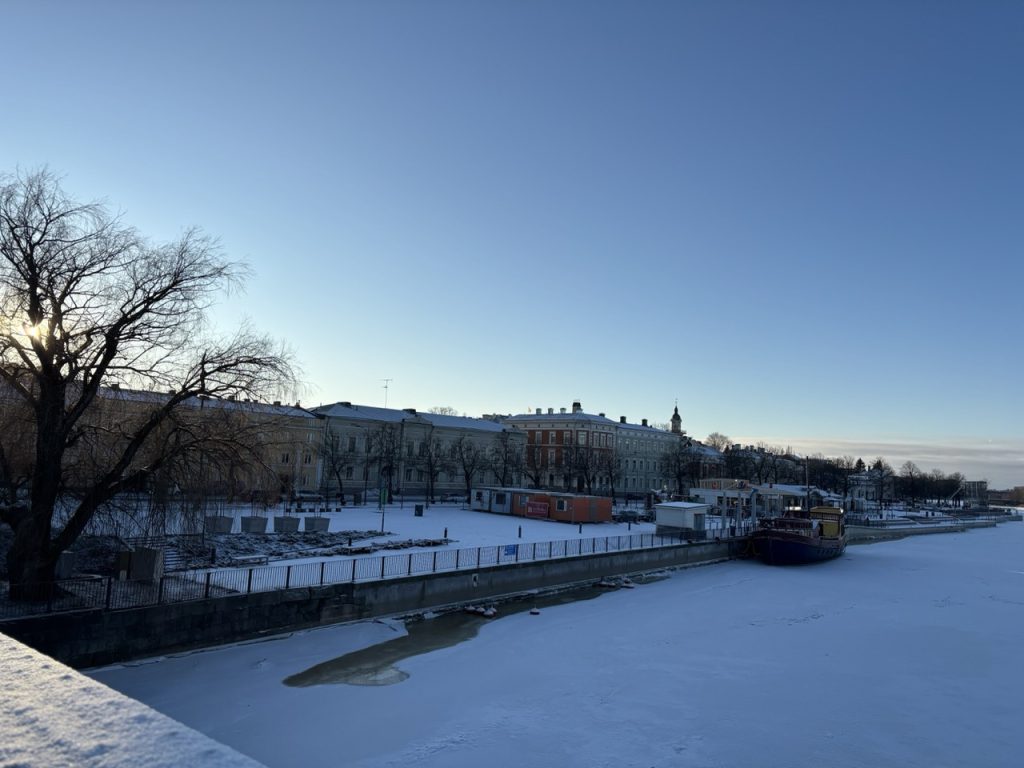
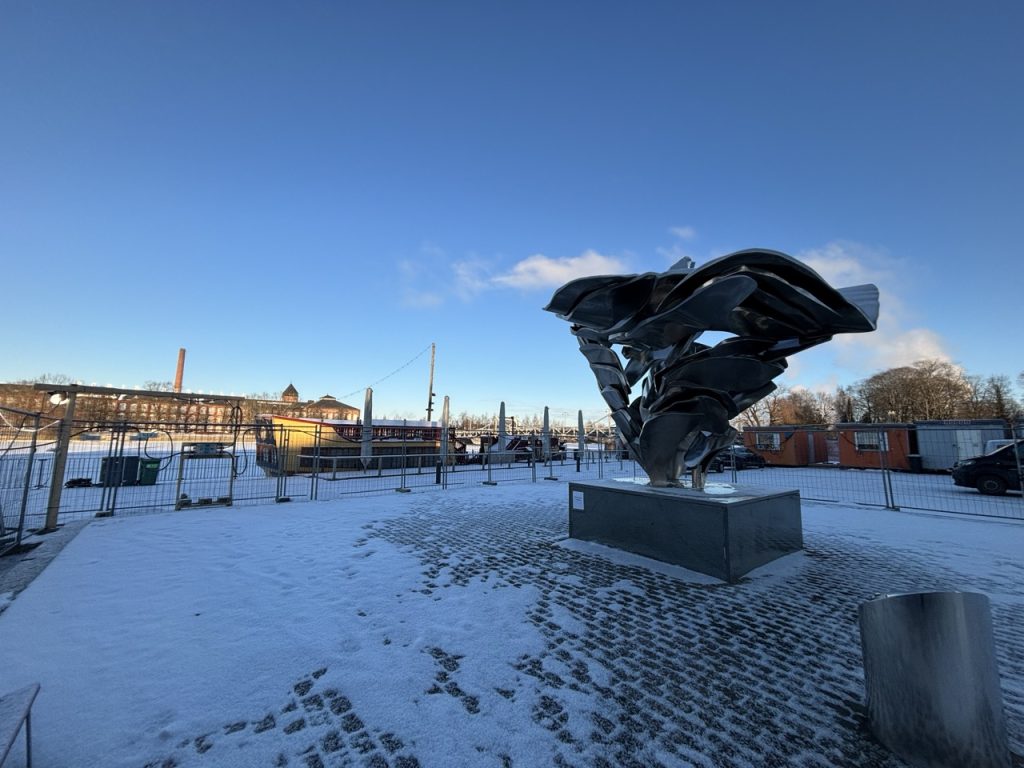
Personally, I like the contrast of architectural designs and materials of the buildings on both sides of the river. At night, they are even more beautiful when the lights are on. This area of Pori city is, in my opinion, the most breathtaking spot in the region.
Check-in #6: Rosenlew Headquarters
This stone house is just across the street. It was built in 1854 by Fredrik Wilhelm Rosenlew and was used as the residence of the Rosenlew family and the headquarters of the Rosenlew company.
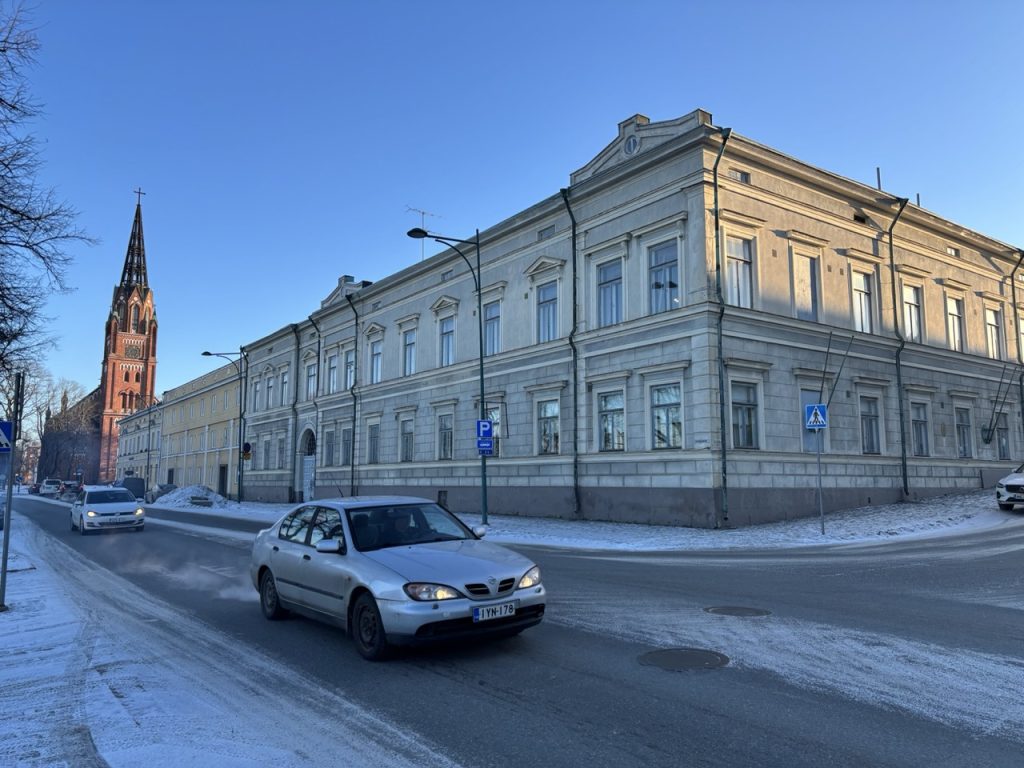
There were 25 luxurious rooms with marble, mirrors, and fine furniture inside. Offices and warehouses were added later for the company. The Rosenlew company operated here until 1986, but the building is used by many modern businesses today.
Check-in #7: The Palace of Junnelius
This impressive building is the Junnelius Palace. It was built in 1895. This architecture shows a lot about how wealthy families lived during the industrial time. The architect August Krook (the one who designed Puuvilla) took inspiration from Italy and used materials from across Europe.
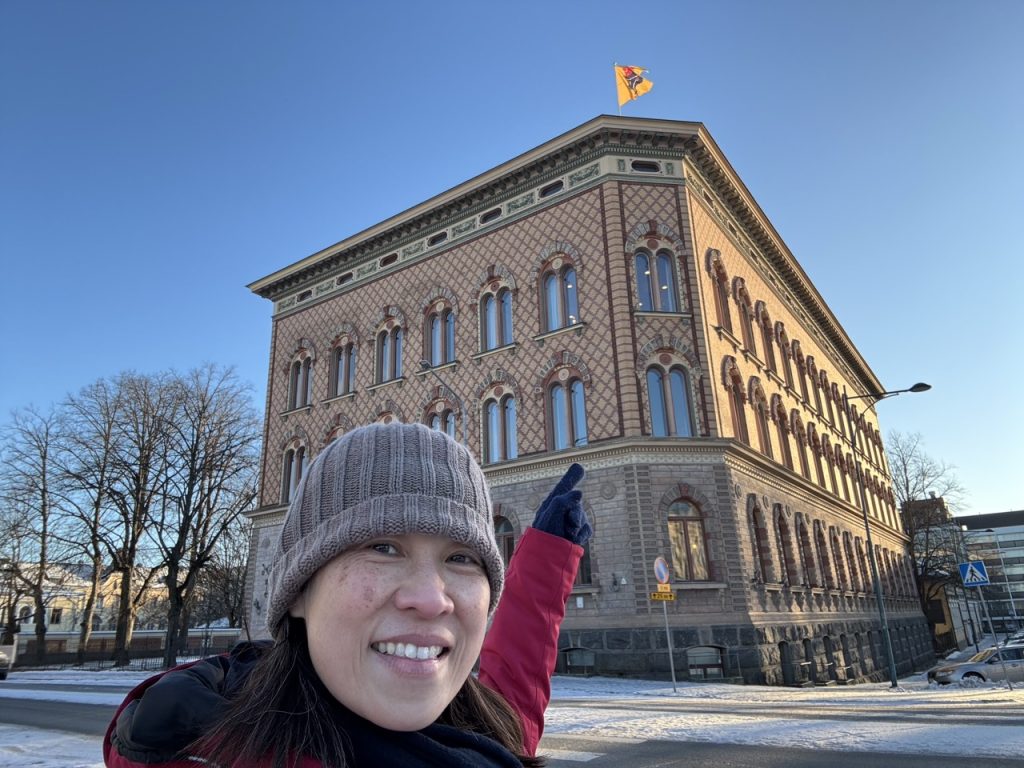
The palace has three large floors and richly decorated rooms. It has been a home, a bank, a newspaper office, and today – it is Pori’s City Hall.
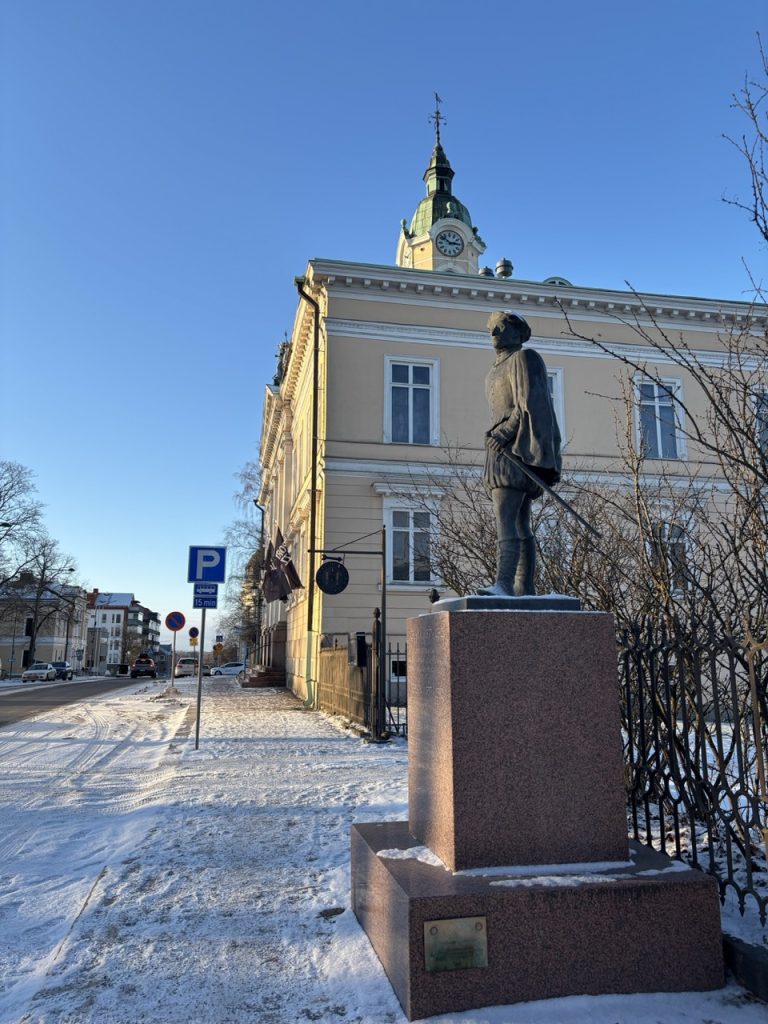
Check-in #8: Pori Old Electricity Company
My final stop is the old electricity plant which built in 1898. This building was important because it brought electric power to Pori. Also, there were a brewery and a dairy in this area. It shows how industries worked side by side in the past.
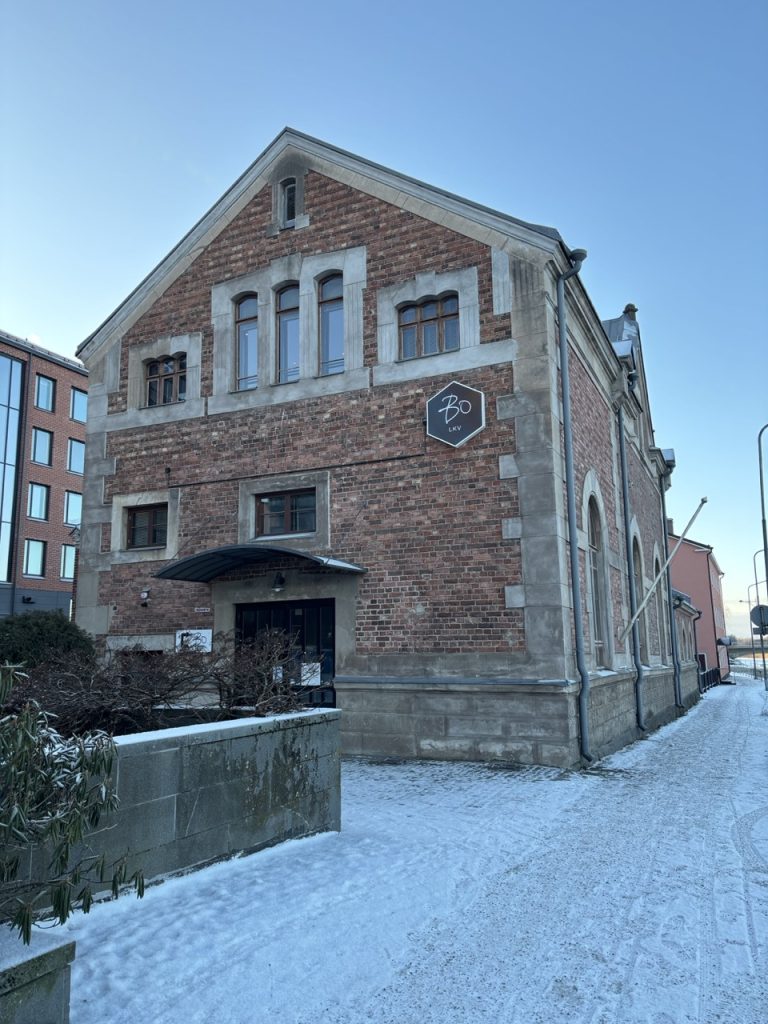
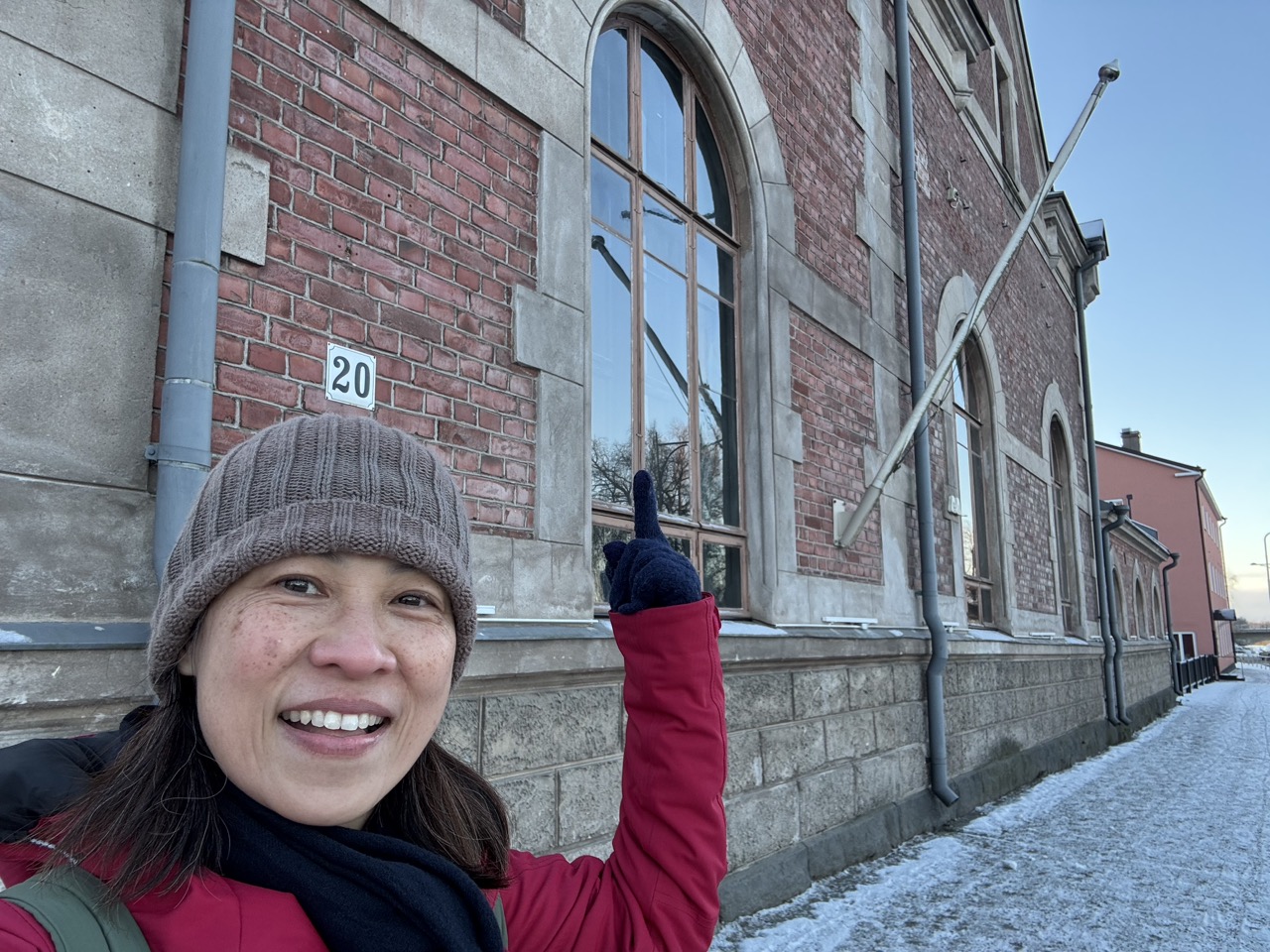
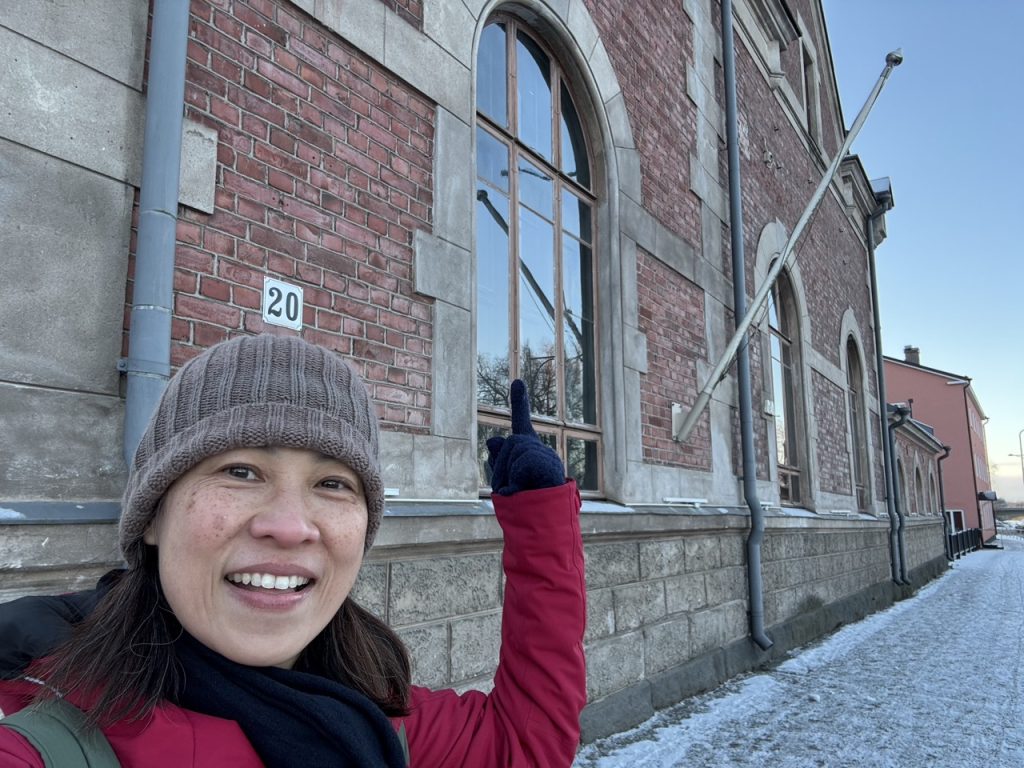
When I first surveyed this building, I was looking for the sign ‘Karhupanimo’ on the building wall, as seen in the website, but couldn’t find it. This building is used now as a housing agent office.
From this walking route, I learned how river, industry, and people have shaped the strong identity of Pori. I think that Pori will never stop changing, but its stories from the past will also keep being told.
Being honest to you, I love this way of learning so much!
Text and photos: Nithipha Chansa-Ing, International Tourism Management student