
A few days ago, I explored Pori city in a new way by following the Parks Art Route, a 2,6 km trail through the city’s park, sculptures, murals and art installations. This walk showed me so many new things that I had never noticed before. From the hidden tunnel to sculptures by the river, each stop has its own story. Walking this route made me excited of how nature and creativity coexist. Here is my journey through all 13 stops.
1. Porisontti – A tunnel transformed
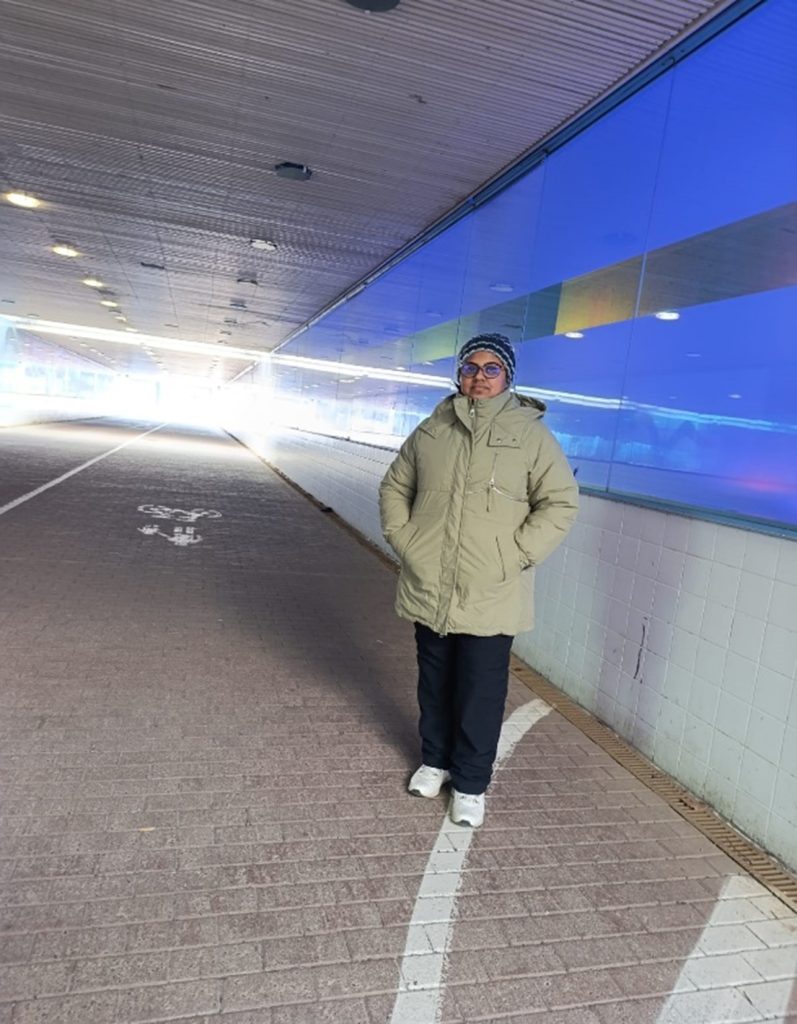
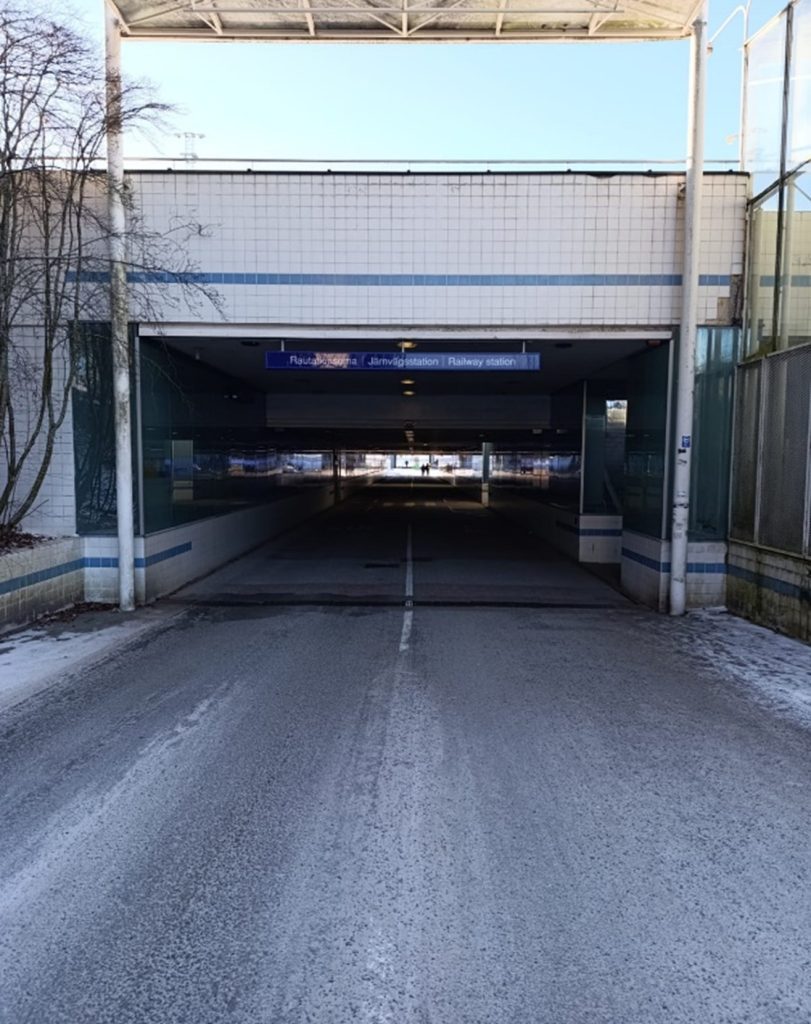
I started my journey at the railway station underpass, where Porisontti (2021) really surprised me. It is not just a tunnel, it is full of colorful lights and a soundscape by Tapani Rinne that changes with the seasons. When walking through this tunnel, I felt calm and safe. It made me see how something as ordinary as a tunnel can feel so magical.
2. Big Rain – Dancing Raindrops
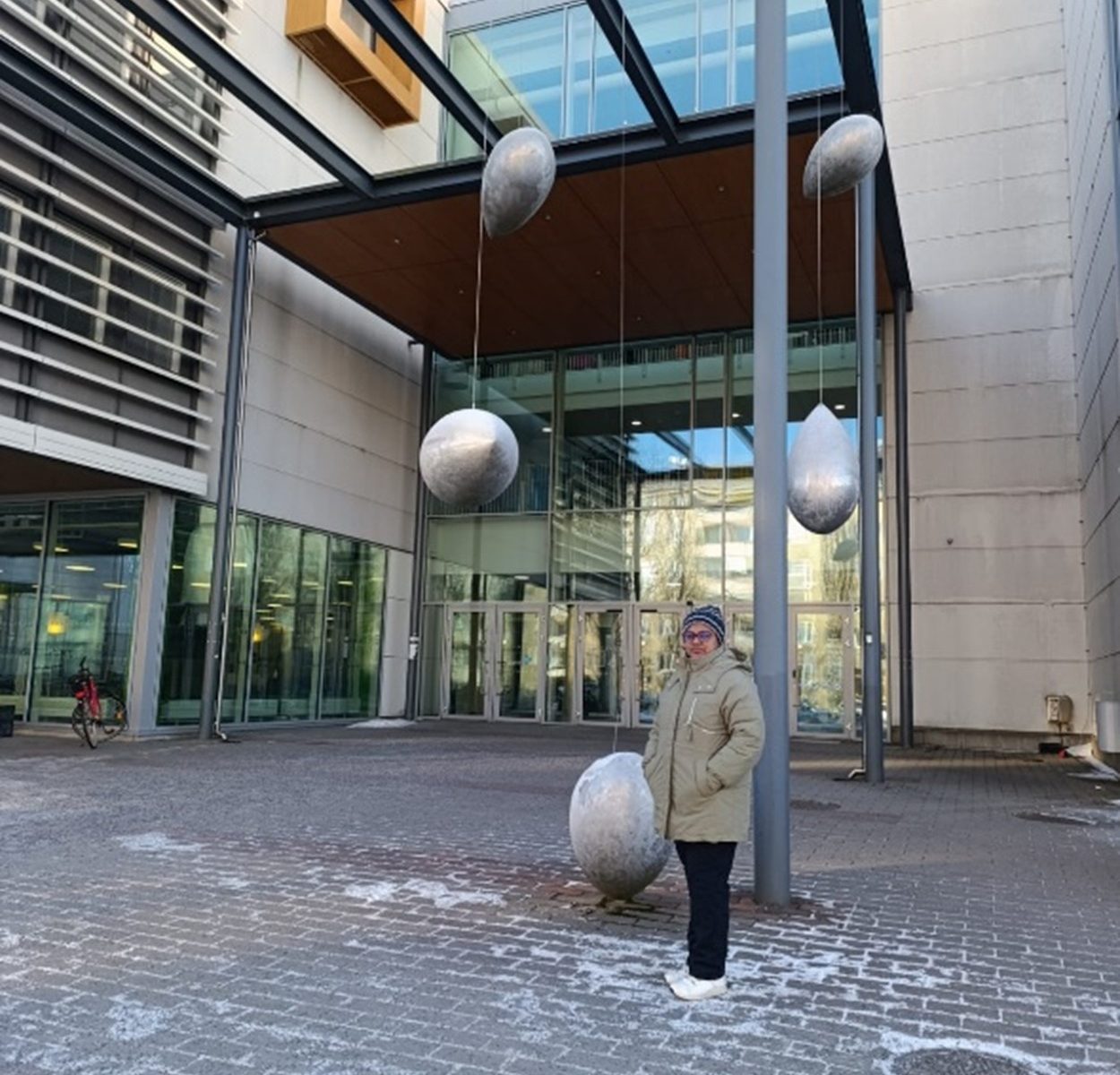
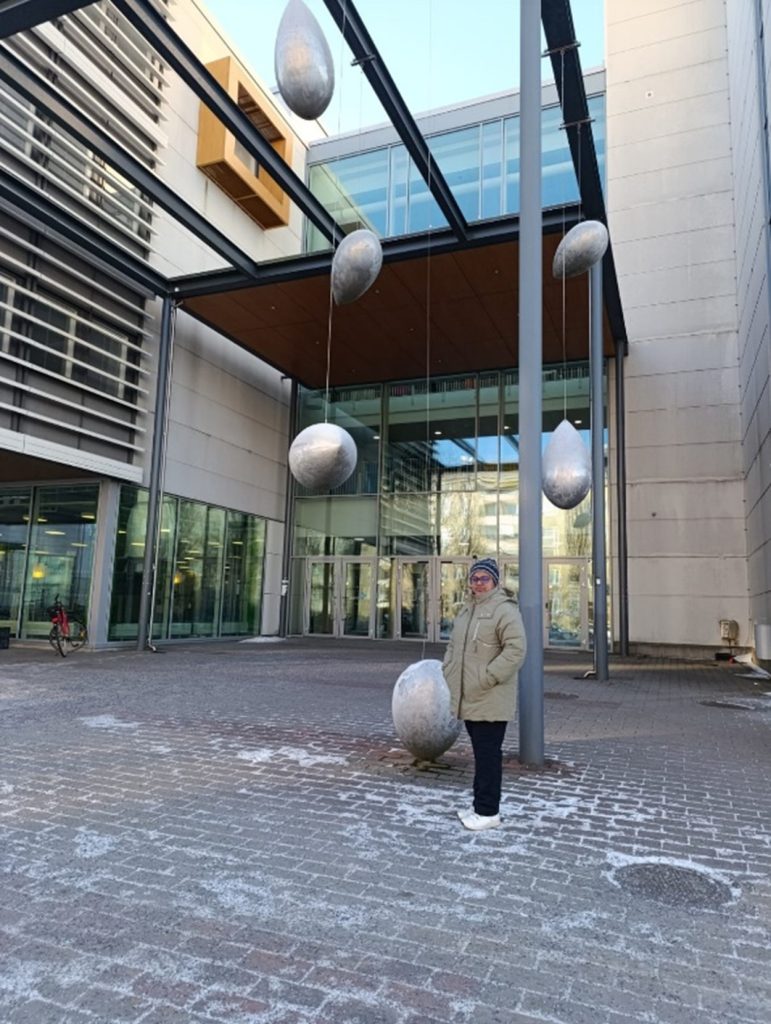
My next stop was the big rain. I found Big Raindrops in front of my campus at Satakunta University of Applied Sciences. Every day I saw these raindrops, but I didn’t know the meaning or value of this.
After this cultural route journey, I learned new things about this Big Raindrops. It was done in 2007 by Tapio Haapala. Six aluminum droplets hanging at different heights might look simple, they swing, rotate, and spin in a fascinating dance. It looks like frozen rain drops in mid fall. It is simple but really brings the street to life.
3. Murals at Antinkatu
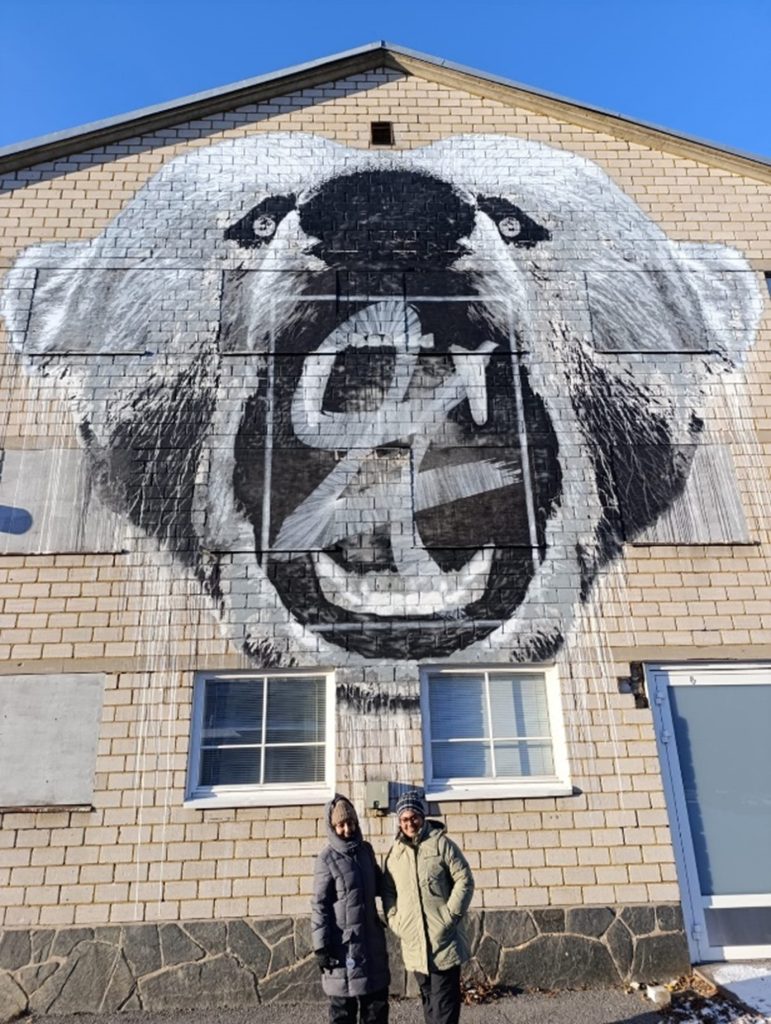
Walking to Antinkatu, I saw beautiful murals that immediately caught my eye. When I go through about the murals, I noticed that Pori was one of the first cities in Finland to get street art. The first, POAR (2015) by Jussi TwoSeven, is on the brick wall of Valimo hall. It shows a powerful bear which represents Finnish folklore with drips and splashes that make it feel alive. When we look closely, we can really notice the patience and skill involved. And his signature is tucked right in the middle, like a little secret for anyone watching closely.
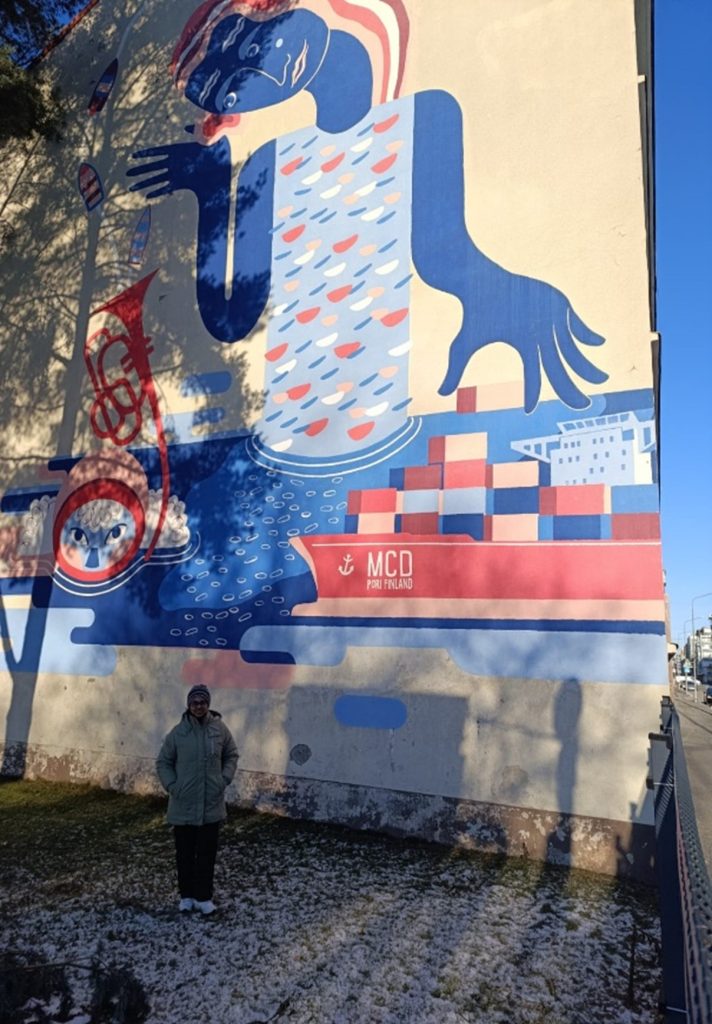
Next to it, Music of the Sea (2016) by the MCD collective celebrates Pori’s maritime culture and music. There are bright colors, flowing shapes, and nautical motifs that made me imagine the harbor. I realized how street art can turn into a mini gallery with colorful, playful, and full of stories.
4. Äestäjä – Honoring Ordinary People
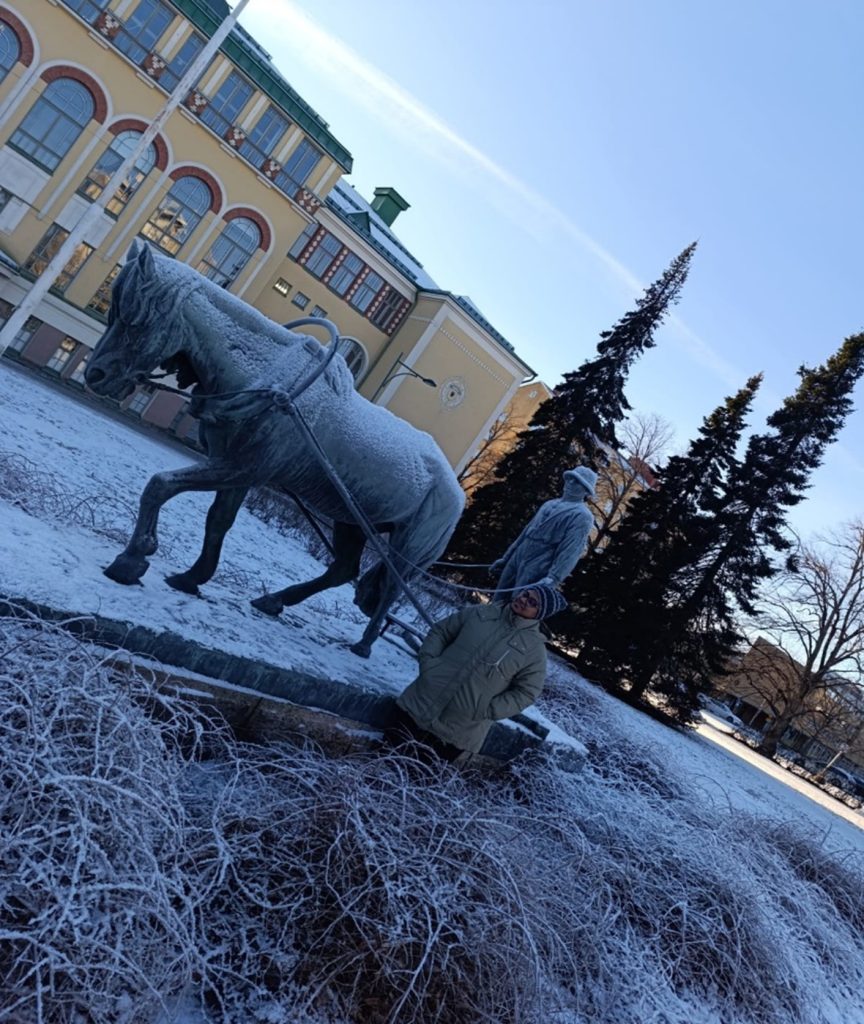
In Cygnaeuksenpuisto, I came across Äestäjä (2019) by Emil Cedercreutz. It shows a farmer working the field with his horse. It is special for celebrating ordinary people instead of politicians. This sculpture itself is impressive, and it was the largest one in Finland at the time, weighing over a ton. We can see they respect animals. It showed us that heroism is in everyday life, and that ordinary life can be beautiful when seen through the eyes of an artist.
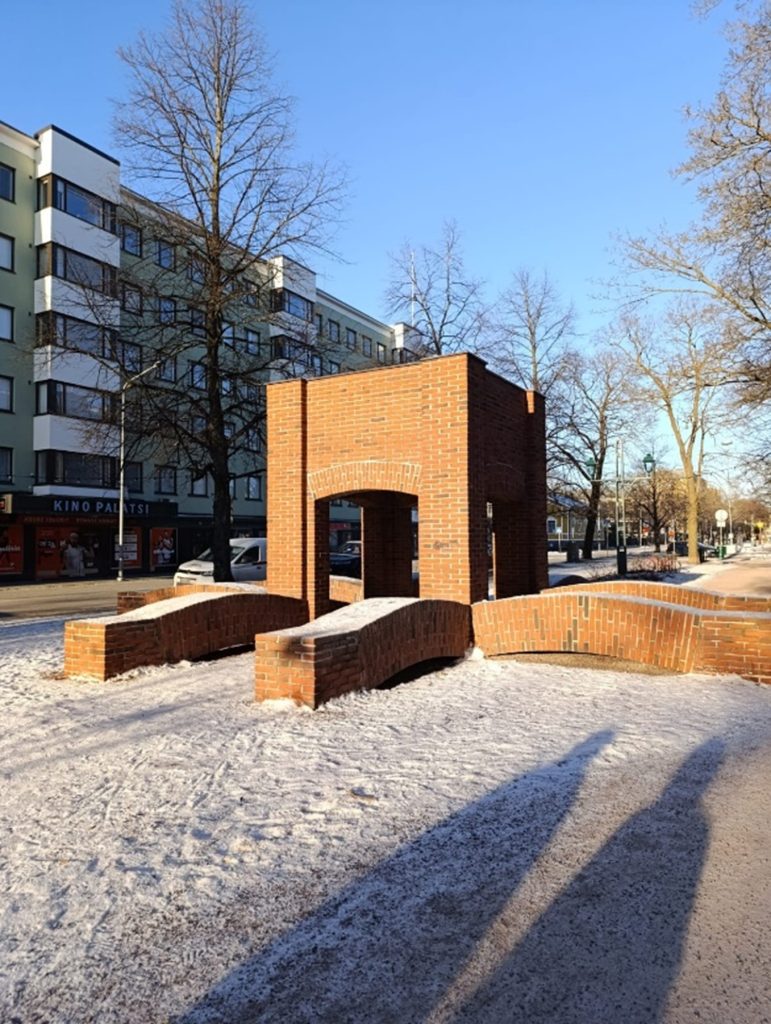
5. Brick Sculpture (Pori Gate)
In Eteläpuisto, I found the Brick Sculpture, or Pori Gate, by Danish artist Per Kirkeby (1993). We can walk through it and sit on it, and also it feels like part of the park. Kirkeby worked in many art forms, but his brick sculptures are special because they mix architecture and sculpture. This rises about four meters high, and it works as a gateway. Walking under the arches felt like stepping through a secret doorway hidden adventure in the middle of the park.
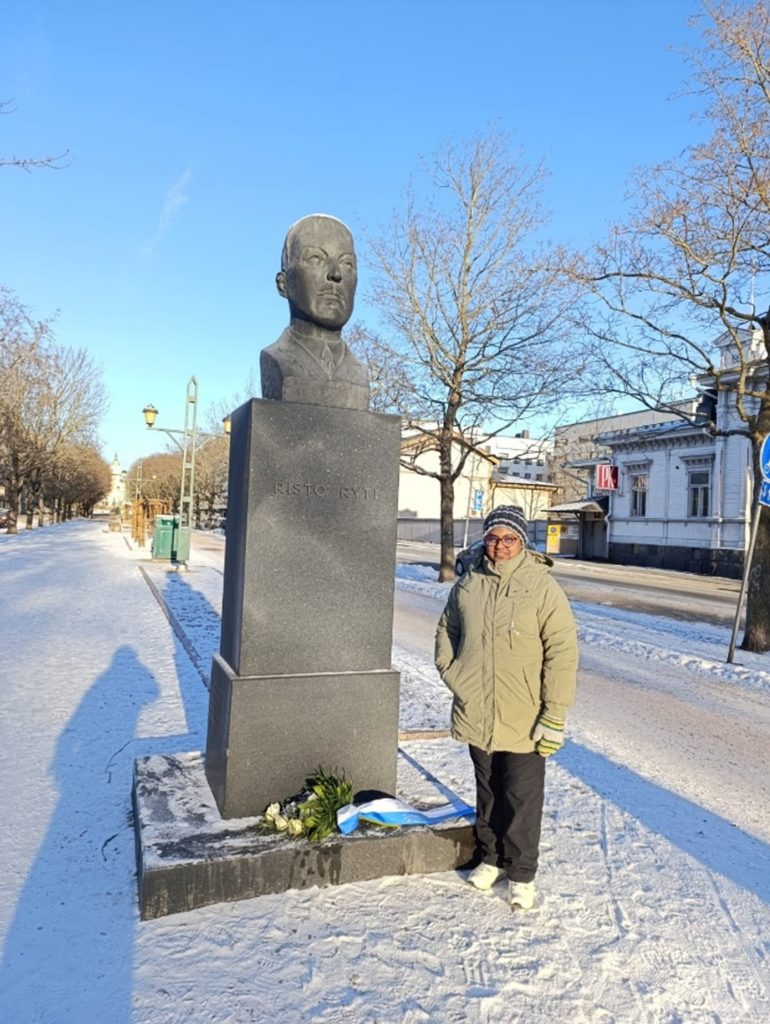
6. Risto Ryti
Walking through Pohjoispuisto, I noticed a quiet bronze sculpture of Risto Ryti, Finland’s fifth President. It is made by Sofia Saari in 2009, and it shows him as a strong, young man, the hardship of war shaped him, and it felt alive. It was made of bronze and granite. It was one of the stops that made me pause and reflect on a simple sculpture, but full of presence and character.
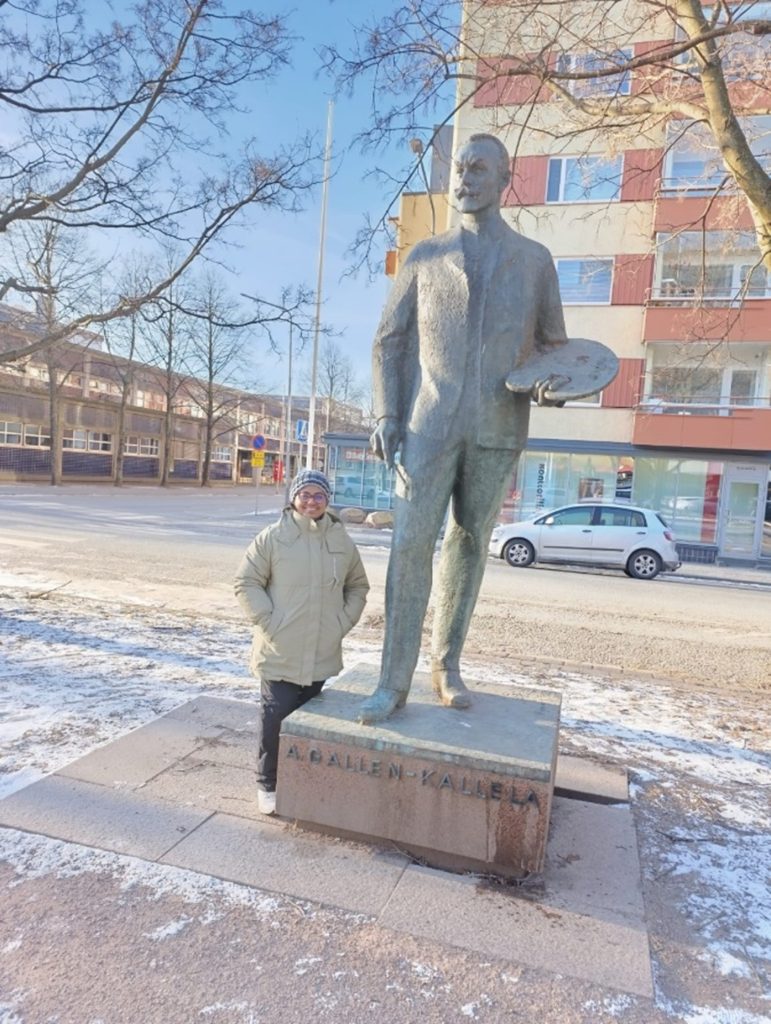
7. Akseli Gallen-Kallela
I came across the statue of Akseli Gallen-Kallela, one of Finland’s most famous painters and a Pori native. It was made by Heikki Nieminen in 1965 for Gallen-Kallela’s 100th birthday, it shows him with a palette and brush recognized as an artist at work.
This statue was built during a Finnish public art was debating. Standing there, I felt connected to Gallen-Kallela and Pori, and proud to celebrate its creative heritage. It is a sculpture that can be felt as both history and artistry at the same time.
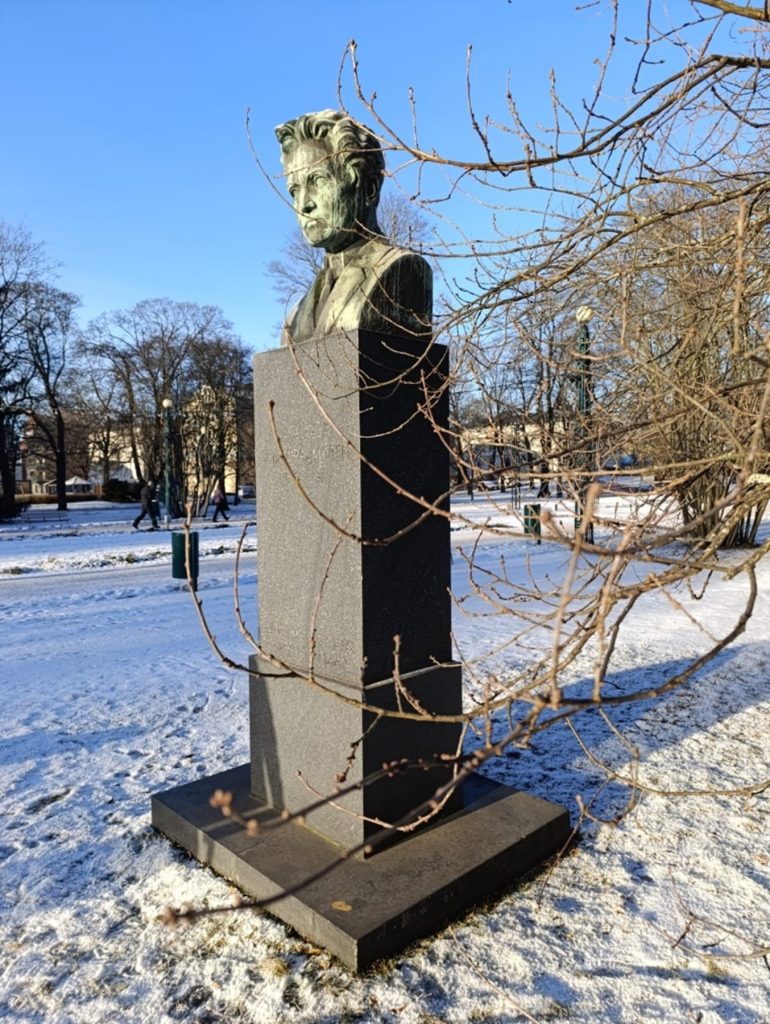
8. Selim Palmgren – Pori’s Musical Genius
My next stop was the bronze sculpture of Selim Palmgren (1955) made by Lauri Leppänen. We could see him at the piano, in his music at home. He was born in Pori, and is one of Finland’s most famous composers and pianists in the early 20th century. Placing it in the park near his childhood home, a place to reflect on his life and work.
The sculpture is realistic, in its expression, showing his character and dedication. I felt respect for both the man who brought music to the world and the city that proudly honors its local talent.
9. Mr. Nortamo – Sitting and Thinking
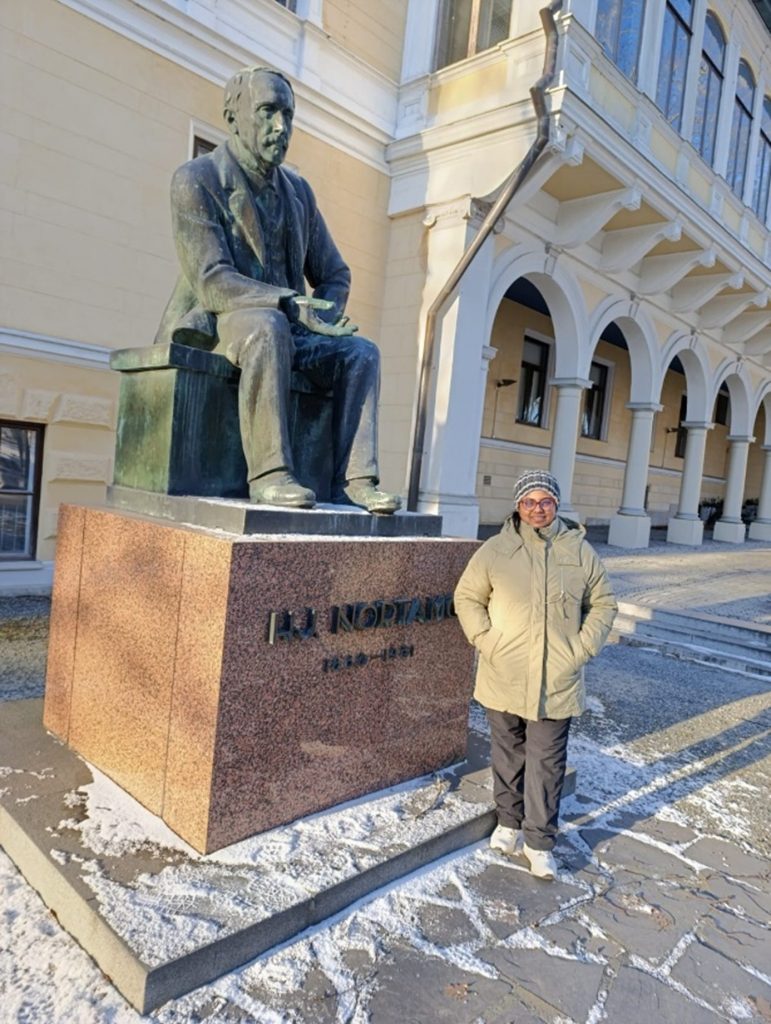
At Teatterikatu 5, I found the bronze statue of Hj. Nortamo (1938) by Yrjö Liipola. It is a formal statue, Mortamo sits casually, learning forward with one arm on his knee, lost in thought. Nortamo, also known as Frans Hjalmar Nordling, was a writer, physician, and active community member. It makes a place like the statue near City Hall Park, and it’s a peaceful place where he might have found inspiration. It reminded me that ordinary spaces and people can hold extraordinary stories.
10. Satakunta Bear
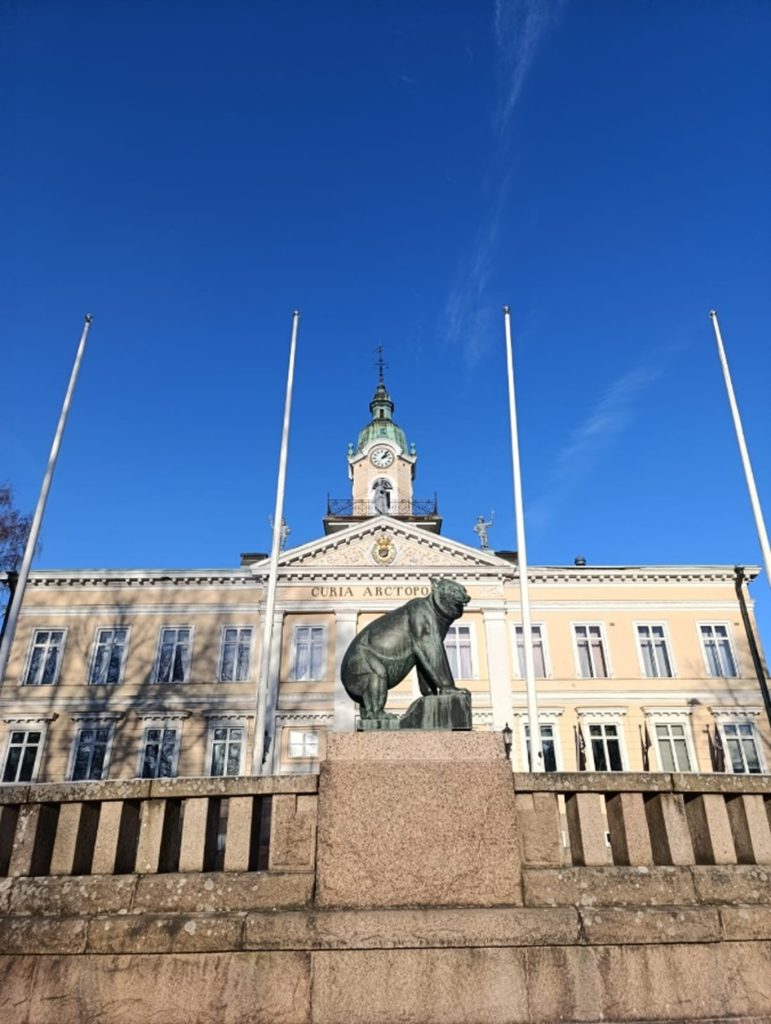
In the northern part of Raatihuoneenpuisto, I saw the Satakunta Bear made by Emil Cedercreutz (1938). This was my 10th stop and it looks quietly powerful and calm but strong, like a guardian of the city. He loved animal motifs, especially horses, but the bear is a perfect symbol for Pori and the Satakunta region. This version was created in 1938. It felt a mixed feeling of fear and comfort. Public art can give character and identity to a place, not just fill a park or wall.
11. The Gull
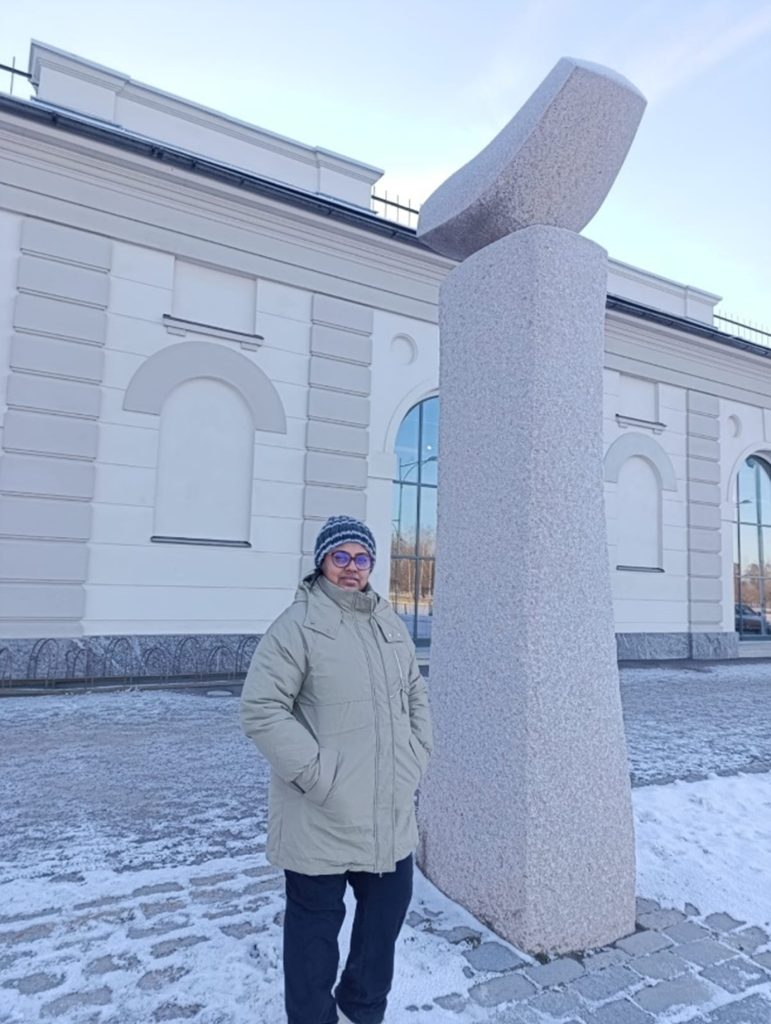
By the river near the Art Museum, I came across Seagull made by Harry Kivijärvi in 1987. It was built of gray granite, and the smooth abstract curves seemed to echo the flow of the river, and it felt calm. This was located on the riverbank and near museum, it blended into the landscape while remaining quietly striking.
I listen to the sound of the water and experiencing the simplicity of the sculpture. It is one of those pieces that makes slow down and feel the harmony between art and nature.
12. Bass String Wings
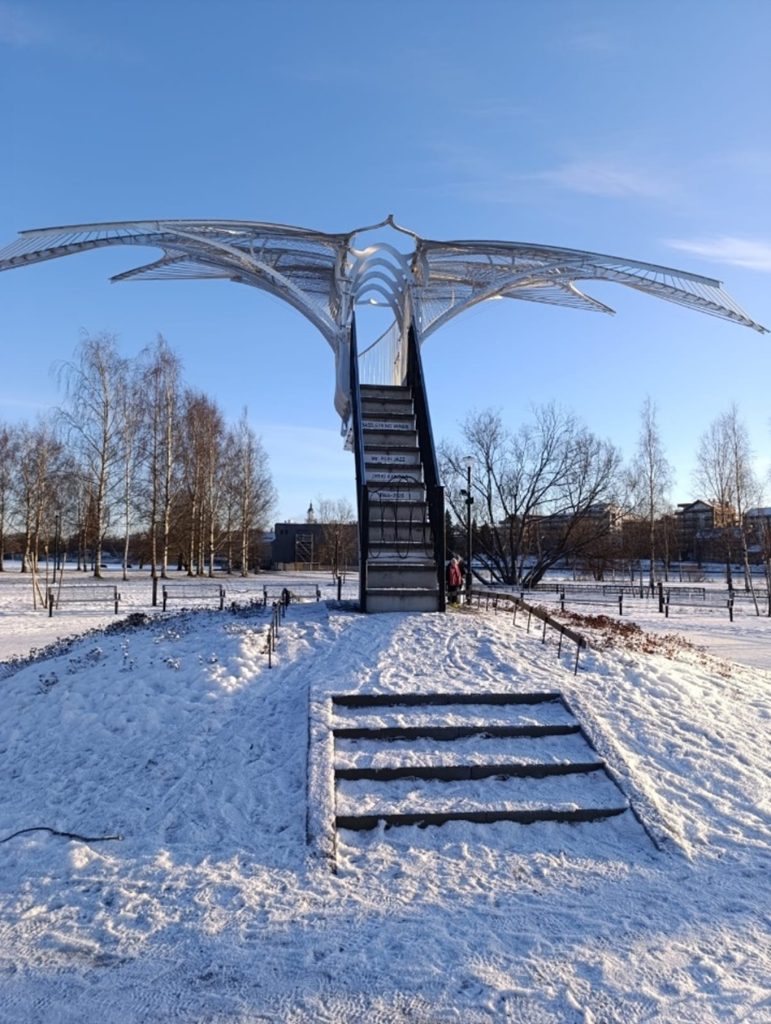
At the end of Kapellimestarinkatu in Kirjurinluoto, I discovered Bass String Wings in 2022 by Pekka and Teija Isorättyä, and it was my 12th stop in my journey. This sculpture is a tribute to Jyrki Kanka, the founder of the Pori Jazz Festival. It is steel structures that stretch 12 meters, and we can climb the platform and play the metal strings.
I listened to their sound, and I noticed that each sounded different, filling the air with jazzy energy. It’s not just for watching, it invites us to participate, create music, and enjoy the movement of art. Honestly this was my favorite stop on the route, a perfect mix of sound, motion, and fun.
13. Magnetism
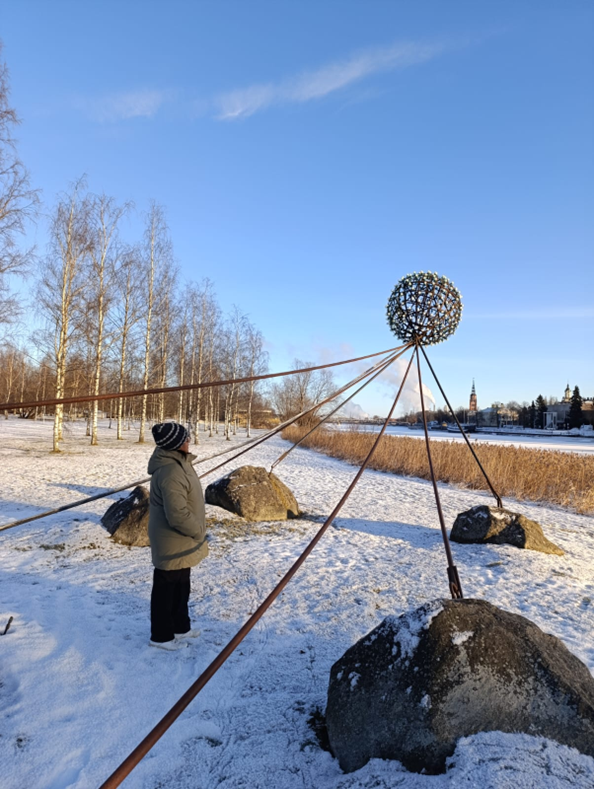
My walk ended at Kirjurinluoto, in front of Vetovoima in 1999 by the artist group YNNÄ+. A glowing ball made of 250 lamps surrounded by seven rocks and looks like a meteor rock. The sculpture was originally meant to be temporary, but locals loved it so much it became permanent. I like how it blends natural materials with light, making it feel part of the landscape.
Ending the journey from here I felt perfect, peaceful, inspiring, and full of wonder. After visiting all the sculptures, from historical figures to interactive art, Vetovoima reminded me that art can transform ordinary spaces into something magical.
Walking along the Parks Art Route, I realized that Pori is more than just streets and building. Art is everywhere like in the subways, in the parks, on the walls and alongside the river. Each stop tells its own story, history, folklore, music, and moments. My favorite stop was the Bass String Wings because it is being able to touch it, climb on it, and can create music that really brought the experience to life. This route is perfect for anyone who wants to slow down, see something new, and enjoy art, nature and its background stories.
Pictures and text: Lakmali Weerasinghe Arachchillage, International Tourism Management student